
Where to Learn Glaze Making in London: A Guide to GLOST’s Workshops
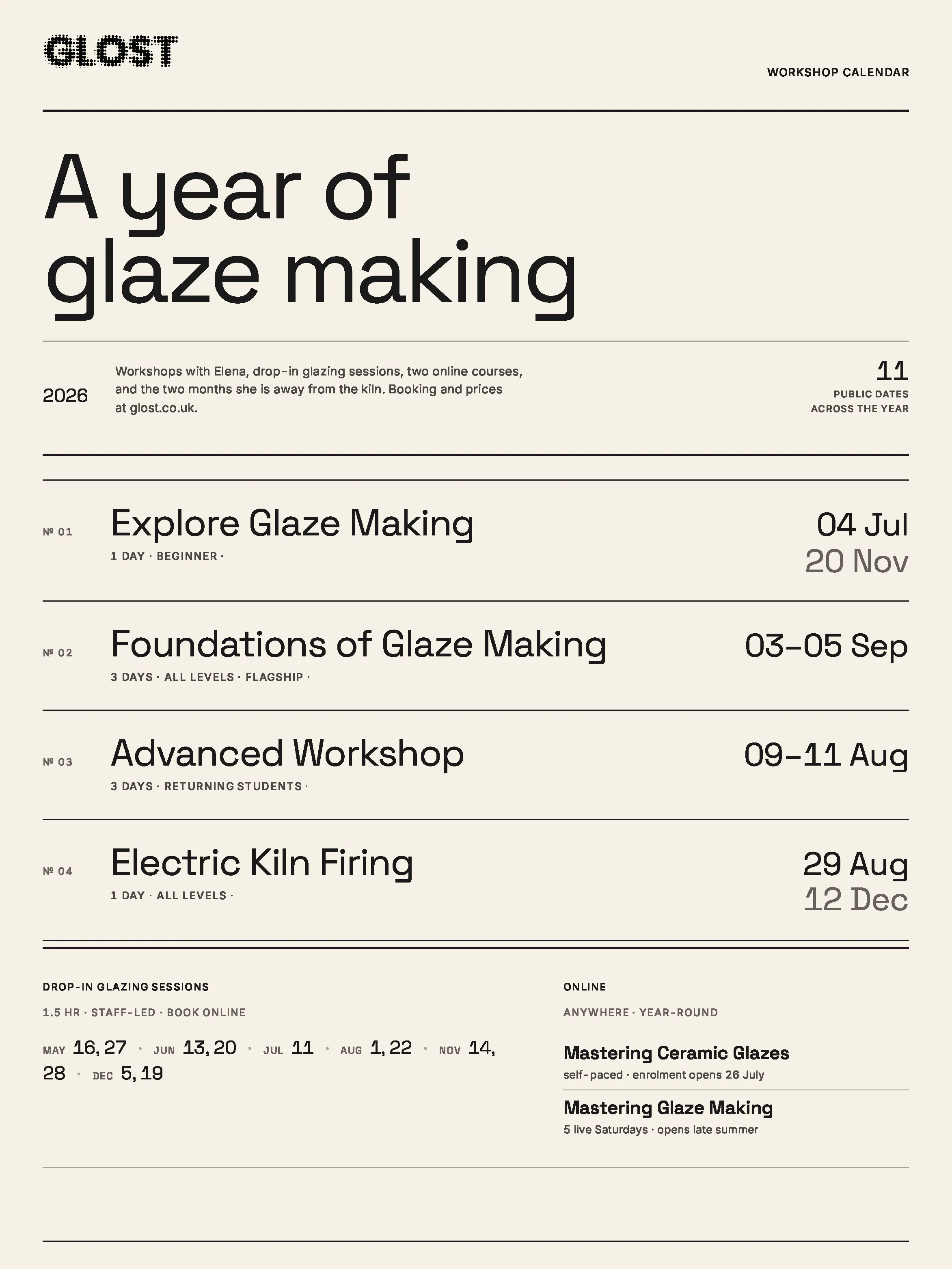
If you’ve searched for a ceramics class in London, you’ll have found dozens of options. Pottery courses, wheel-throwing classes, hand-building workshops, kintsugi evenings, drop-in glazing sessions. Most include some glazing as a step, usually at the end, often with a small selection of pre-made glazes and minimal explanation of what you’re doing or why.
What you’ll find far less of is workshops that teach glaze making itself : the chemistry, the recipes, the testing, the firing, as a discipline in its own right.
This is the gap GLOST was set up to fill. The studio in Peckham runs a small programme of glaze-focused workshops across the year, from one-day introductions to three-day intensives.
This article is the guide I wish existed when I started looking for this kind of teaching in London. It covers what the workshops are, who each one is for, what the differences are, when they run in 2026, and where else in the UK you can learn glaze making if GLOST isn’t the right fit.
The Glazing Session runs most weekends; check the website for live dates. The self-paced online course is available continuously.
Dates for 2027 will be announced in late 2026. If you’re on the GLOST mailing list you’ll see them first; if not, you can sign up at glost.co.uk.
Why glaze making is different from pottery classes
A pottery class teaches you to form a piece in clay. Glazing it is usually the last step before firing: you dip, brush, or pour a prepared glaze and the studio fires it.
Glaze making is a different practice. It is the work that comes before that step. It is asking: what is this glaze made of, why does it look the way it does, what would happen if I changed it. It is the chemistry of materials reacting under heat: silica, fluxes, alumina, colourants, opacifiers and the testing required to develop surfaces you can rely on.
You can be an experienced potter and not know glaze chemistry. You can also be a beginner who is more drawn to surfaces than to forming, and want to start there. Either is valid. What unifies the people who take these workshops is curiosity about what’s actually happening inside a kiln, and a wish to understand and control it.
You do not need a chemistry background. You need a willingness to learn a new vocabulary.
The GLOST workshop programme at a glance
Six workshops and experiences are on the calendar for 2026. They sit on a spectrum from one-off creative session to advanced practice. They are not a fixed curriculum - you can start anywhere that matches where you are.
The Glazing Session - a one-off creative session
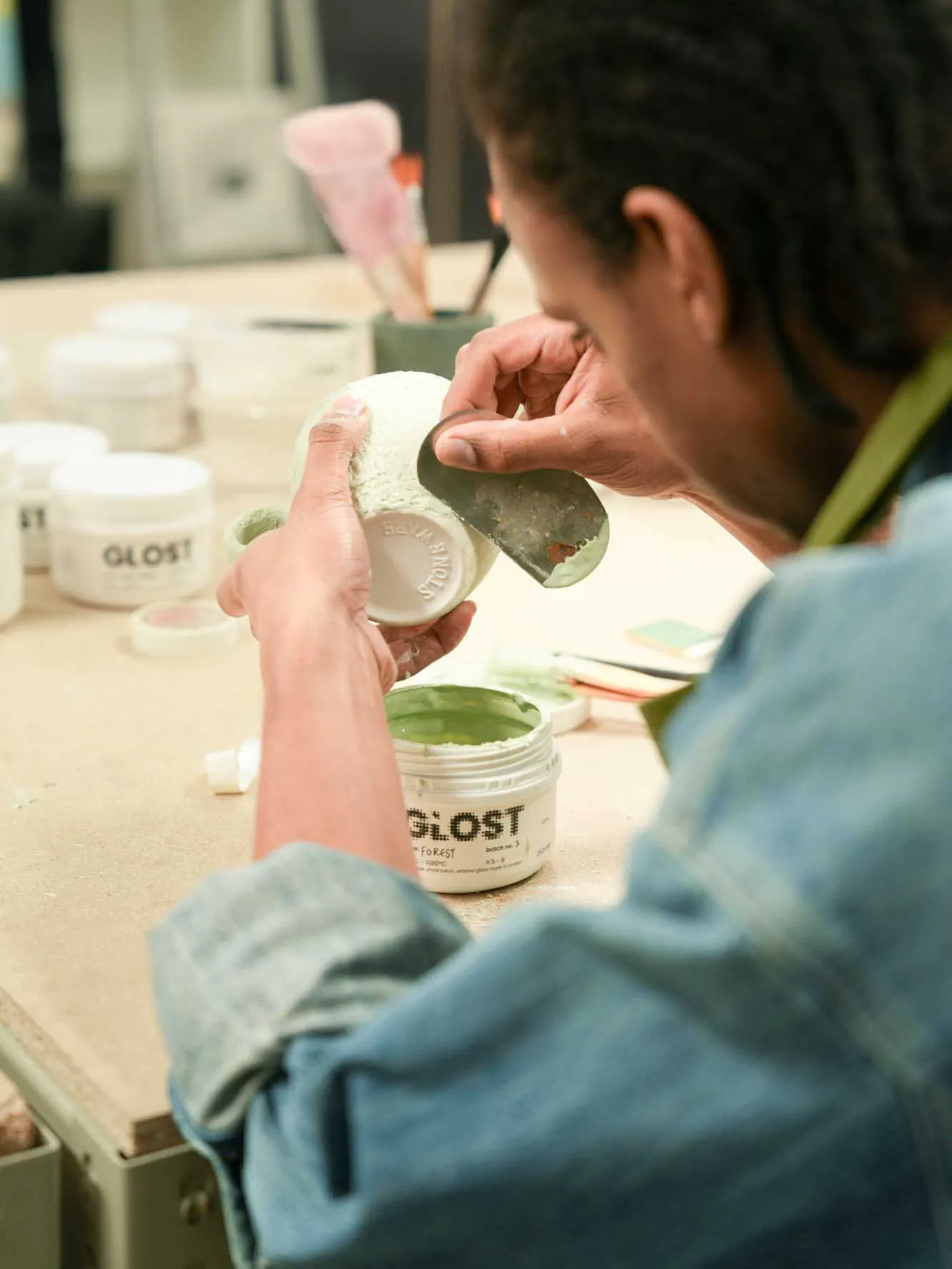
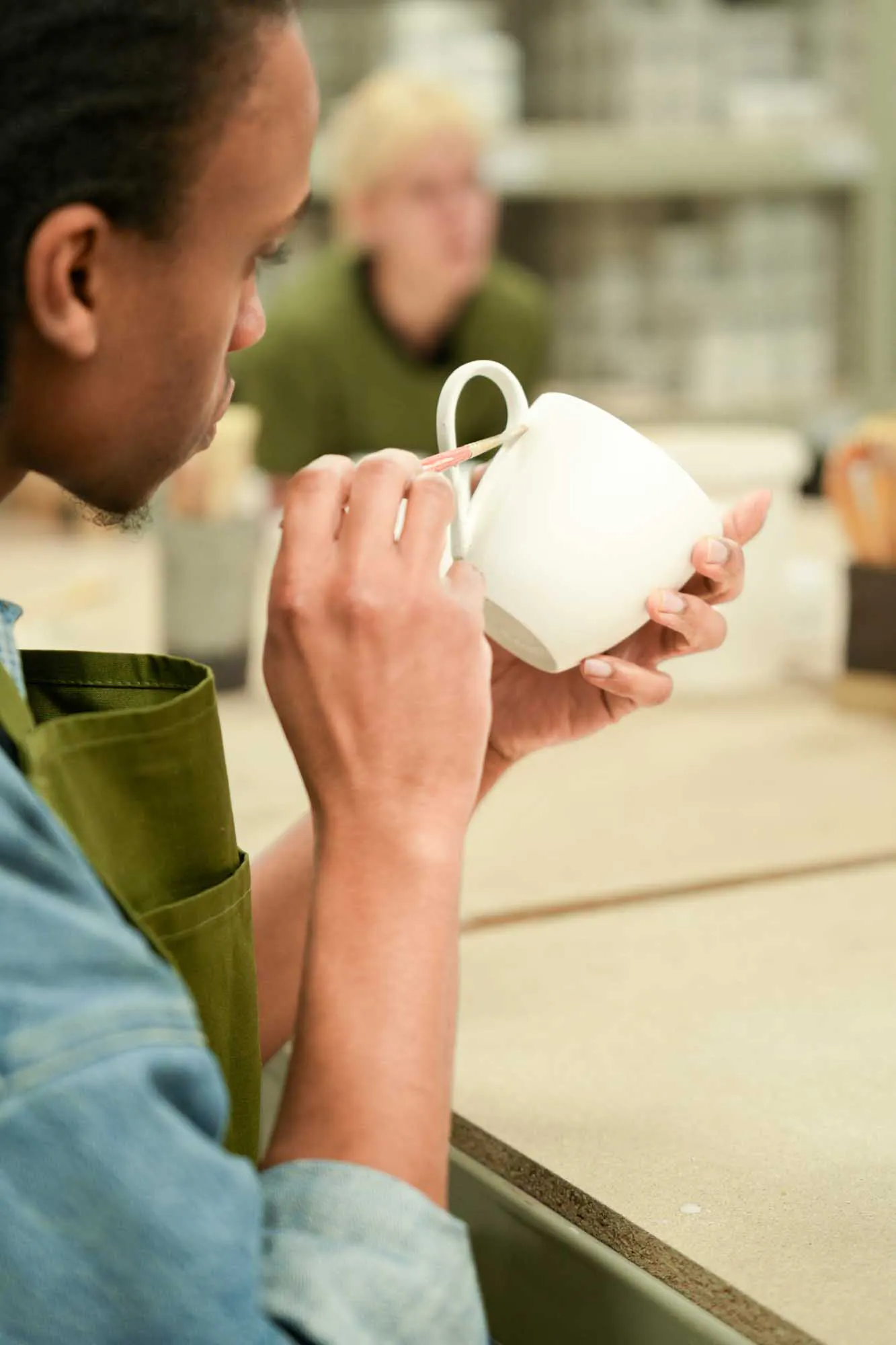
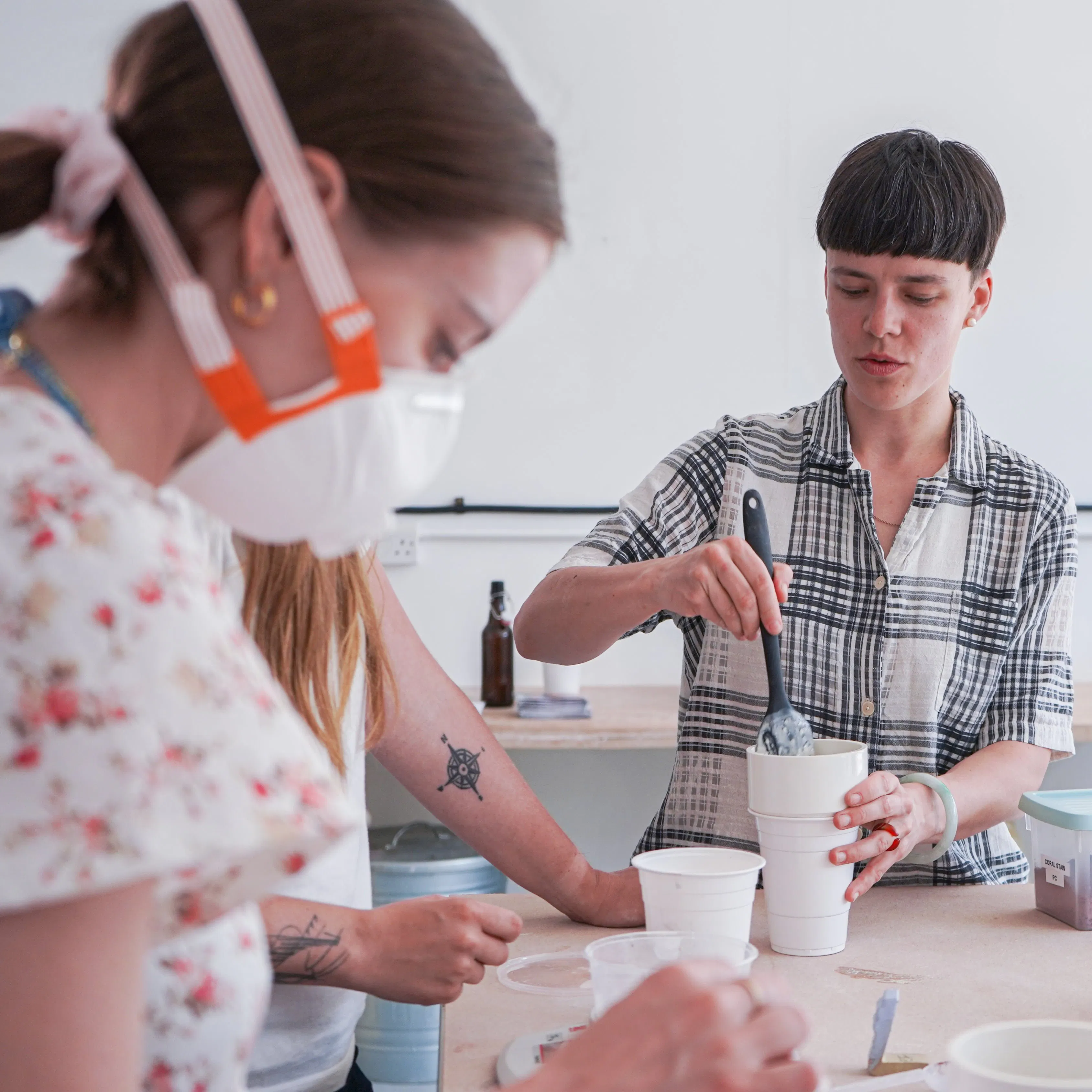
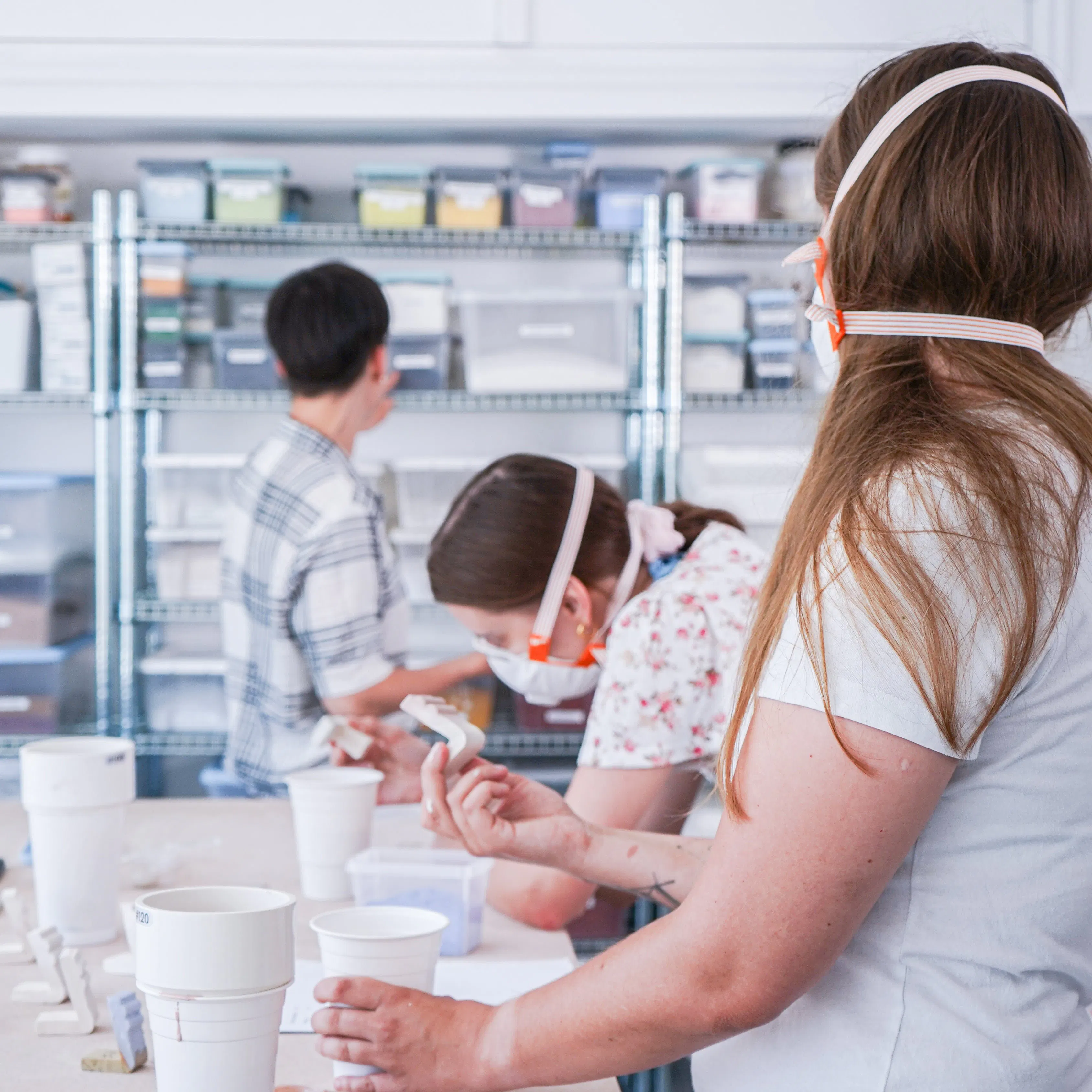
Before the workshops proper, a note on the lowest-commitment way to come and use GLOST glazes in person. The Glazing Session is a 1.5 to 2 hour drop-in where you glaze a pre-made bisque piece/ a bisque of your own, using the full GLOST range, and we fire it.
This is not a chemistry course. We will not teach you to formulate a recipe in two hours. What you get is the experience of working with serious glazes in a real studio, with guidance on application technique, and a finished piece to take home about three weeks later.
It works as a birthday or gift activity, a first visit to the studio, or as a way to see how a glaze you’ve been thinking about actually applies and fires before committing to a full workshop.
Price: £45 per person. Your choice of bisque at extra cost. Glaze and firings included.
For: anyone curious about ceramic glazes who wants a hands-on hour or two without committing to a full workshop. Gift-able.
Explore Glaze Making - the one-day introduction
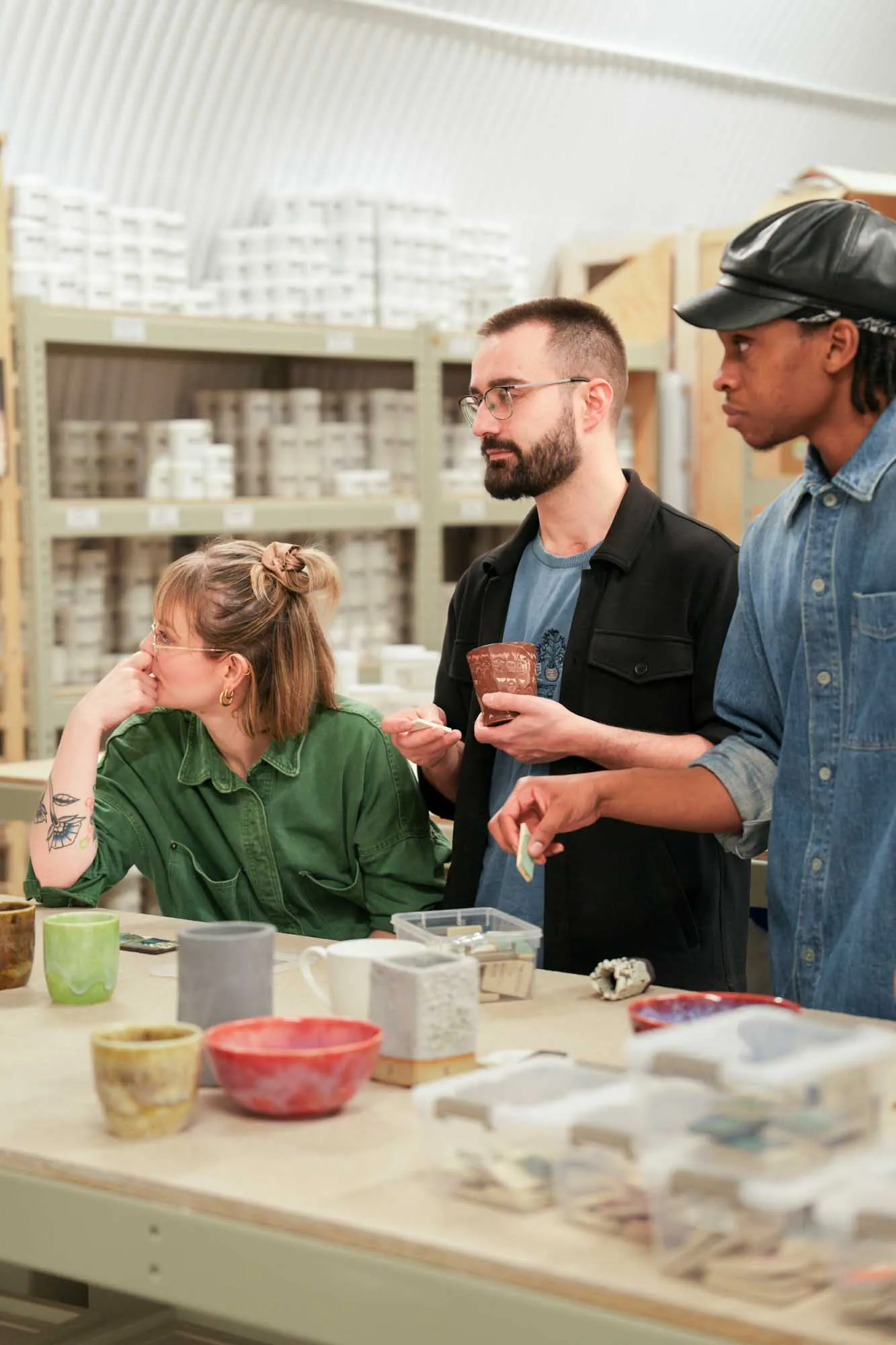
A single day in the studio, designed for people who are curious about glaze making but want to test the water before committing to the three-day course.
You work through the basic vocabulary of glaze chemistry : what flux, silica, and alumina actually do, why temperature matters, how colourants behave - and you mix and apply test glazes. The day ends with pieces on the shelves ready for firing.
This is not a comprehensive introduction. A day is not long enough to build a foundation in glaze chemistry, and I will not pretend otherwise. It is a chance to see whether the work interests you and to come away with a small set of fired tests to think about. Many people who take this day go on to book the three-day course; some don’t, and that’s a useful answer in itself.
Price: £190 per person. All materials and firing included.
For: complete beginners, people unsure whether glaze chemistry is for them but want to try.
Foundations of Glaze Making - the three-day intensive
The flagship workshop. Three consecutive days, run once or twice a year, taught by me with no more than six to eight students at a time.
Over three days we cover:
- The structure of a glaze: flux, silica, alumina, and what each does
- Reading and writing recipes
- Mixing from raw ingredients
- Applying glazes - dipping, brushing, layering
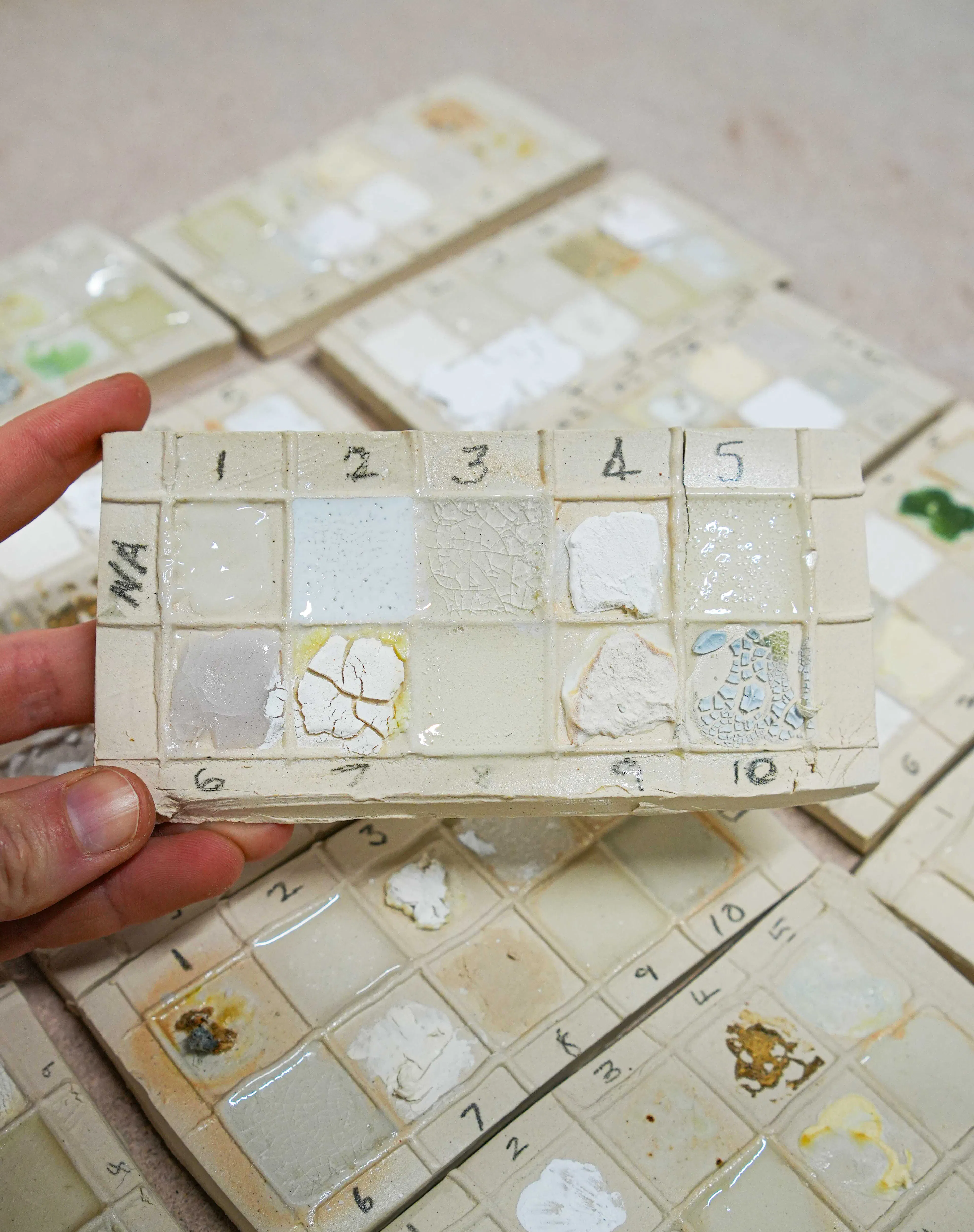
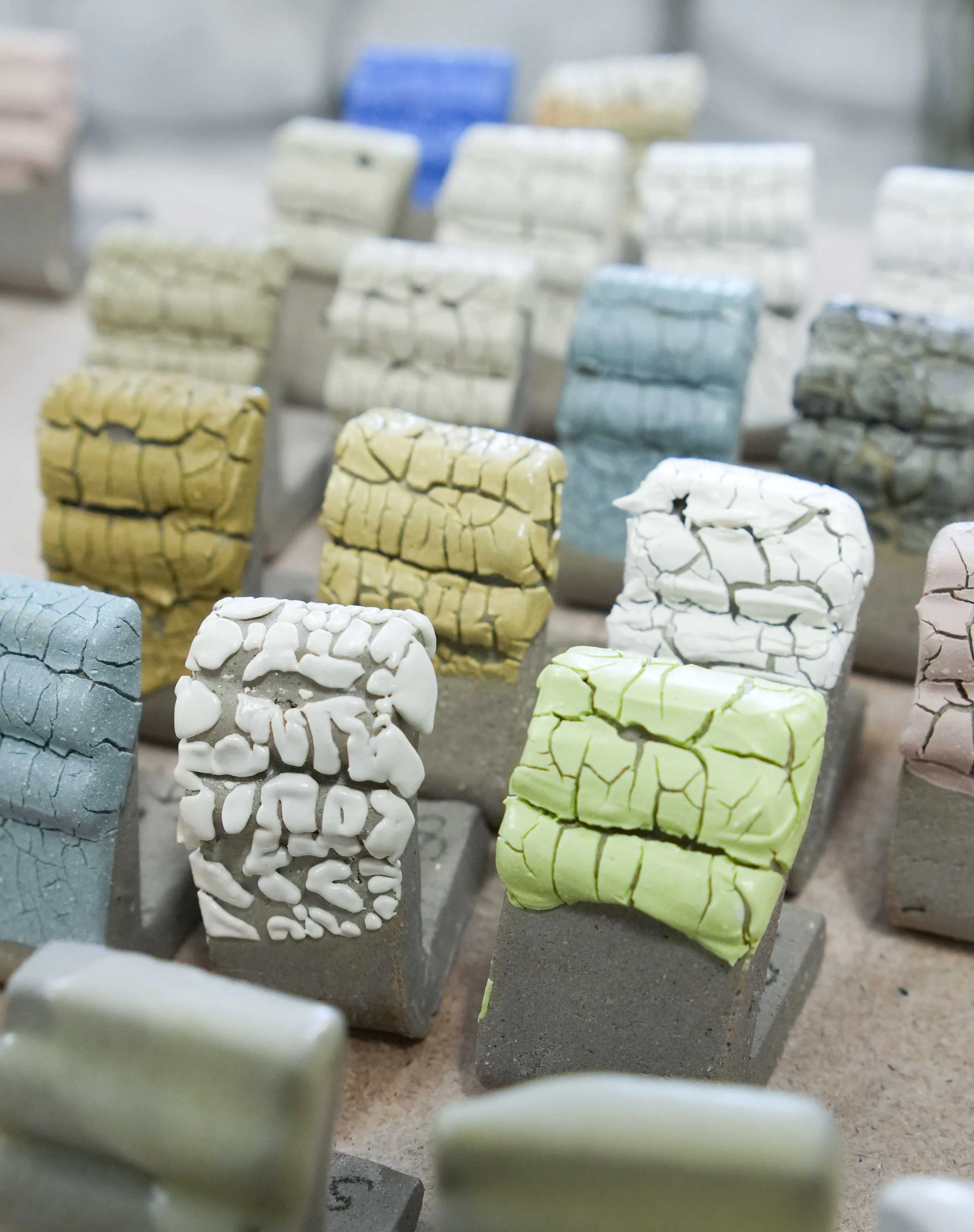
- Test tile methodology
- Loading and firing the kiln
- Reading the fired results and adjusting
You leave with a notebook of recipes you’ve mixed yourself, a set of fired test tiles, and the framework to keep developing glazes in your own practice. Pre-made test tiles are provided so we maximise time on chemistry and decision-making rather than tile production. All materials, firing, and tools are included. Tile shipping to your home is extra if you’d prefer not to carry them.
This is the workshop most people should book first if they are serious about learning glaze making. The one-day course is an introduction; this is the foundation.
Price: £400 per person, all materials, test tiles, and firing included.
For: anyone serious about understanding glaze chemistry. No experience needed, but readiness to engage with technical material is essential.
Electric Kiln Firing Fundamentals
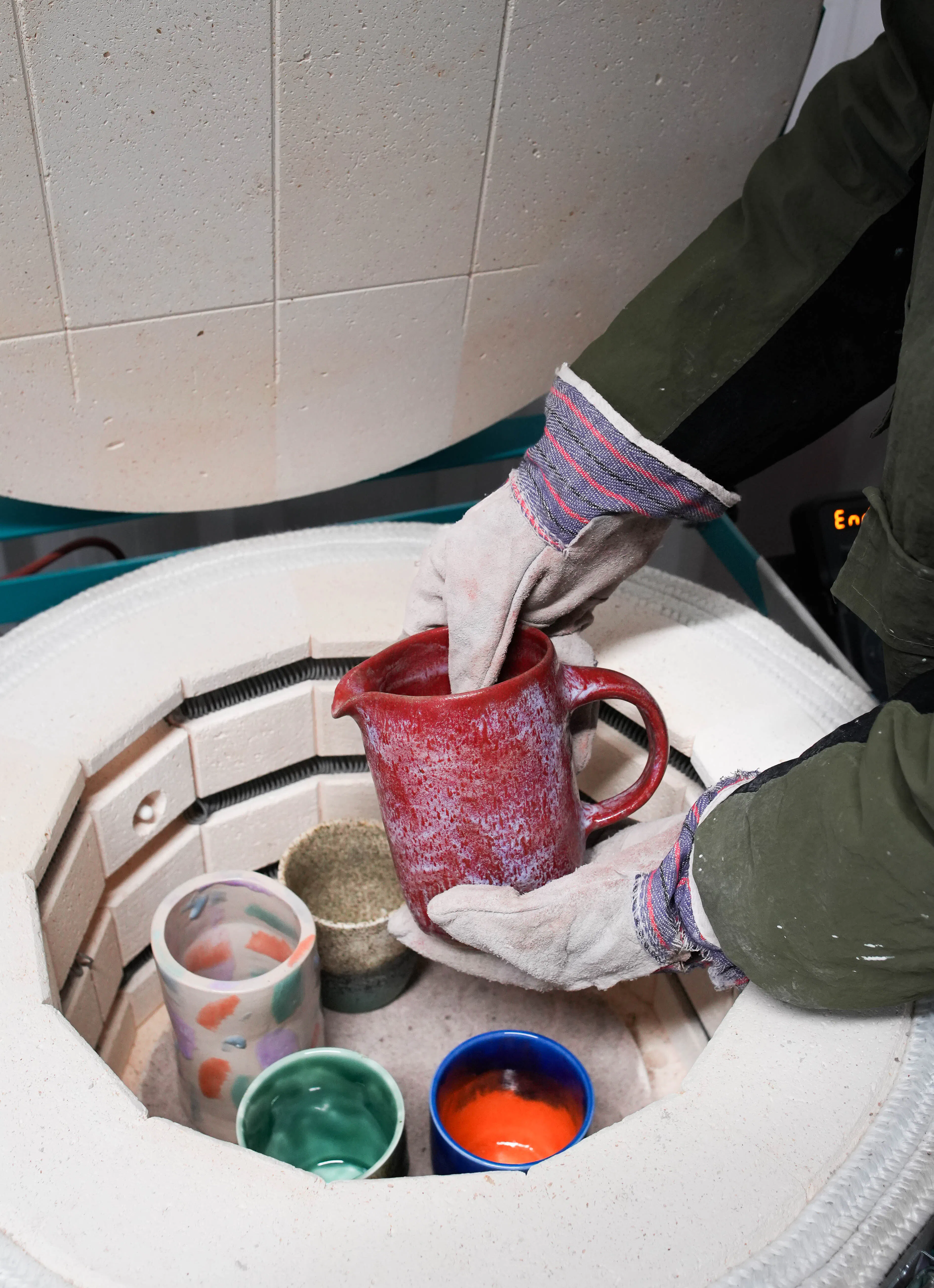
A two-hour workshop on what is actually happening inside your electric kiln, how to programme it, how to load it, and how to read the results.
A glaze recipe is only half the story; the firing is the other half. The same glaze applied to the same body fired in a different kiln, or programmed differently, will produce different results. This workshop is for the people who have bought a kiln, or are about to, and want to use it with confidence rather than guesswork.
We cover: cone numbers and what they actually mean, ramp rates, soak times, oxidation and reduction (briefly - most electric kilns can’t reduce reliably), kiln safety, common faults.
Price: £130 per person.
For: anyone who owns or is about to own an electric kiln. Especially useful after Foundations.
Advanced 3-Day Workshop - what comes after Foundations
Designed for ceramicists who have completed Foundations (or the equivalent elsewhere) and want to go further.
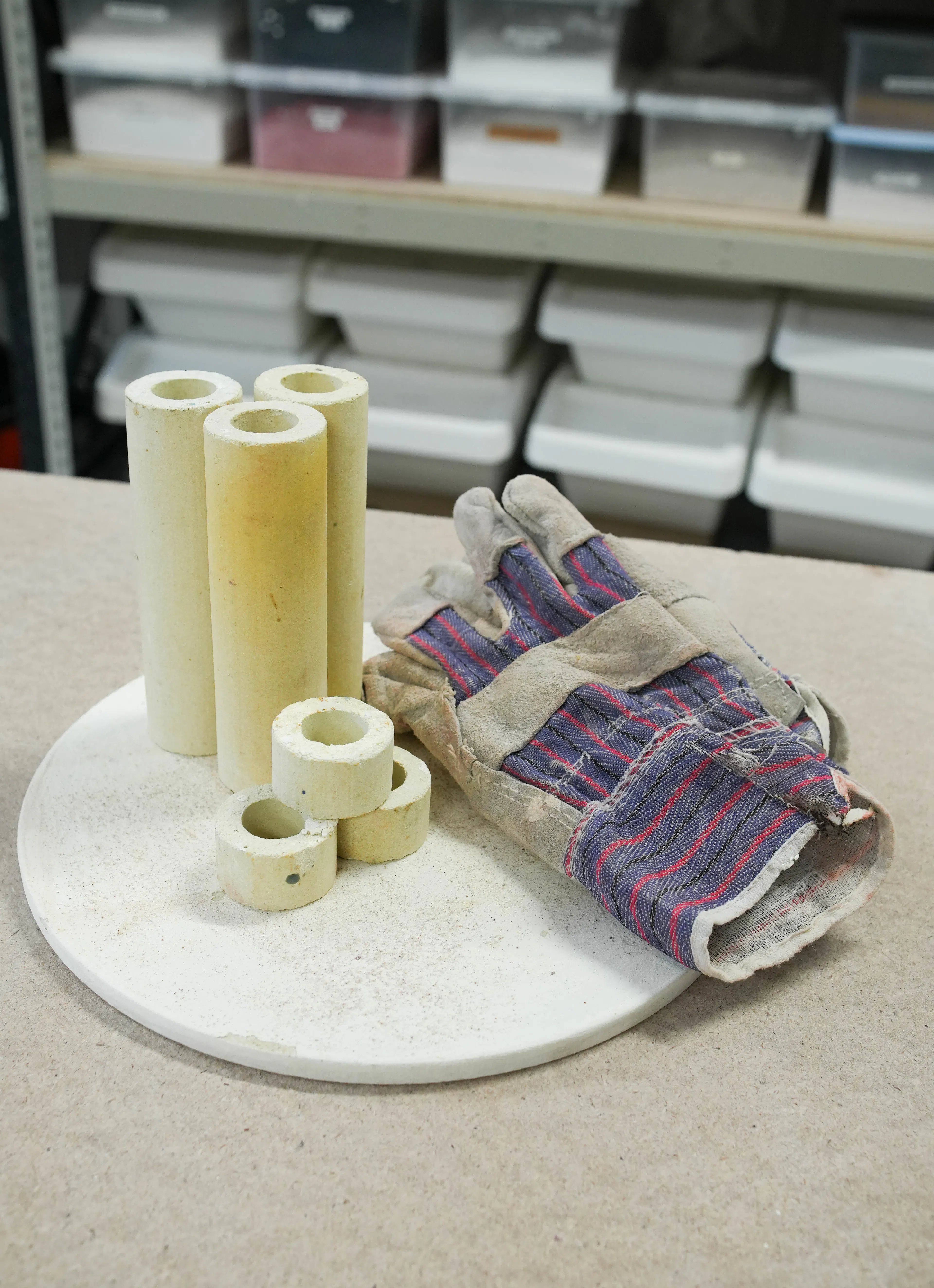
We work through more advanced topics: line blends and triaxial blends, eutectic mixtures, formulating glazes from scratch around a target surface, troubleshooting common faults. By the end of three days you should be able to set up a structured testing programme of your own.
The same £400 price as Foundations. The difference is depth and audience. If you book Advanced without the relevant prior knowledge, you will be lost. If you book Foundations expecting Advanced material, you will be frustrated. Choose the right one. If you’re not sure, ask us.
For: Foundations graduates, ceramicists with equivalent prior learning, working potters wanting to formulate their own glazes systematically.
Mastering Ceramic Glazes — the online course, two formats
For ceramicists outside London, or for anyone who prefers to learn online, the Foundations material is available as an online course. There are two formats. They cover the same material; the difference is how it’s delivered.
- Self-paced (pre-recorded) - £300
The Foundations content as a structured set of recorded video lessons with downloadable references. Start whenever you like, work through at your own pace, revisit any module as often as you need. You keep access to the recordings.
*For: people who learn best watching videos they can pause, people whose schedule doesn’t allow fixed dates, anyone who wants the material without the time commitment of a live cohort.
- Live cohort - £450
Five sessions taught live online, once a year, with a fixed start date. Same material as the self-paced version, plus real-time Q&A, live demonstrations, and the chance to discuss your own tests and results as the course progresses. Sessions are recorded so you can re-watch them afterwards, but the value is in being in the room.
For: people who want the discipline of fixed dates, the interaction of a cohort, and the chance to ask Elena questions live. Closest format to the in-person workshop without coming to Peckham.
The next live cohort runs 1–29 August 2026. The self-paced course is available continuously.
How to choose between them
A few honest signals.
-If you want a one-off creative session, not a course:book the Glazing Session. It’s the lowest-commitment way to come and use GLOST glazes.
-If you have never mixed a glaze before and want to test whether this work is for you: book Explore Glaze Making (1 day). It’s the lowest-commitment way to find out whether glaze chemistry is for you.
-If you know you’re serious and want to learn properly: book Foundations of Glaze Making (3 days). It’s the right starting point for almost everyone.
-If you’ve done Foundations or have equivalent experience: book the Advanced 3-Day. The next layer of depth.
- If you can’t get to London or can’t commit to consecutive days: the online course. The self-paced format (£300) starts whenever you do. The live cohort (£450) runs once a year, with five live sessions and real-time Q&A same content, more interaction.
- If you own a kiln and don’t fully trust it: Electric Kiln Firing Fundamentals. Most useful after Foundations, but works standalone.
Hosting a workshop at your studio
Alongside the programme at GLOST, I take on a small number of guest teaching engagements each year at other studios in the UK and abroad. Recent examples include The Ceramic Studio in Kent and a workshop in Zurich. Formats are usually one or two-day intensives tailored to the host studio’s equipment, space, and student level.
Studios interested in hosting a glaze making workshop are welcome to get in touch. Details via the website.
Where else to learn glaze making in the UK
I’d rather tell you what else exists than pretend GLOST is the only option. If London-based glaze chemistry teaching doesn’t fit, here is what else is out there.
-Linda Bloomfield masterclasses. Linda is one of the most known glaze educators in the UK and an author on the subject. She runs occasional masterclasses across the country, including in London. Her teaching emphasises chemistry and confident experimentation. If you can get a place on one of her courses, take it.
-City Lit (Covent Garden). Runs ceramics courses with occasional glaze-focused sessions. More general than specialist, but a long-standing institution with experienced tutors.
-Westminster Adult Education Service. Offers ceramics including some short glazing courses. General-purpose, with the broader pottery curriculum around it.
- Bath Potters’ Supplies. Occasionally runs technical days at their site near Bath. Worth checking if you’re prepared to travel.
- Hot Clay. Runs the occasional online course and offers a lot of free educational content on YouTube useful for self-study even outside their paid offering.
The honest summary: in London specifically, dedicated workshops in glaze making as a discipline (rather than glazing as a step in pottery practice) are rare. That is the gap GLOST was set up to fill. If you want this kind of teaching and can come to Peckham, the workshops above are designed around that need.
Frequently asked questions
Do I need any experience to take a glaze making workshop?
No. Explore Glaze Making and Foundations are designed for complete beginners. You do not need a background in chemistry, ceramics, or pottery. You need a willingness to engage with a new vocabulary and to make decisions based on test results.
How long does it take to learn glaze making?
Foundations gives you the framework in three days. That framework will keep paying back for years. Becoming fluent in glaze chemistry, like becoming fluent in any technical practice, is a longer process -but you can start producing reliable, considered glazes after the three-day course if you keep testing.
What’s the difference between Foundations and the Advanced workshop?
Foundations builds the foundation: chemistry, recipes, testing, firing, from the ground up. Advanced assumes you have that foundation and works on more complex formulation methods (line blends, triaxial blends, eutectics) and structured testing. Same length, same price, different audience.
Can I take the online course instead of the in-person one?
Yes. The online course covers the same material as Foundations and comes in two formats. The self-paced version (£300) is pre-recorded and available continuously; you work through it whenever suits you. The live cohort (£450) runs once a year, with five live sessions and the chance to ask questions in real time. The live cohort is the closer parallel to the in-person workshop; the self-paced version is the flexible alternative. Many people take one of these and then come to Peckham for the in-person workshop later, or the reverse.
What’s the difference between the Glazing Session and the workshops?
The Glazing Session is a one-off creative session where you glaze a pre-made piece using GLOST glazes. It’s not a chemistry course. The workshops (Explore, Foundations, Advanced) teach glaze making - what’s in the jar, how to mix it, how to develop your own. The Glazing Session is for people who want to use the glazes; the workshops are for people who want to make them.
What do I get to take home from a workshop?
Fired test tiles from your own work, a notebook of recipes you’ve mixed, and the framework to keep developing on your own. From the three-day courses, enough material to begin a serious testing programme in your own studio.
Where exactly is GLOST?
Railway Arch 848, Brayards Road, Peckham, SE15 2AG. Closest stations are Peckham Rye (Overground / National Rail) and Queens Road Peckham (Overground). About 12 minutes’ walk from either.
Do you do private or group bookings?
Yes. The Glazing Session is available as a Private Hire for groups of up to 20 (minimum £750). Get in touch via the website for details.
Can I invite Elena to teach a workshop at my studio?
Yes. Elena teaches guest workshops at studios in the UK and internationally - recent examples include The Ceramic Studio in Kent and a workshop in Zurich. Formats are usually one-day or two-day intensives tailored to your studio’s space, equipment, and student level. Get in touch via the website to discuss.
Can I gift a workshop?
Yes. Gift vouchers are available for any of the workshops on the GLOST website.
GLOST is at Railway Arch 848, Brayards Road, Peckham, SE15 2AG.
Open Tuesday to Sunday
Phone during opening hours: 07956 002055.
Elena Gileva is the founder of GLOST, a ceramic glaze brand and supply studio in Peckham, London. GLOST makes small-batch glazes, stocks ceramic materials and tools, and teaches glaze chemistry across a small programme of workshops year-round. Elena is also regularly invited to teach as a guest at studios in the UK and internationally.